
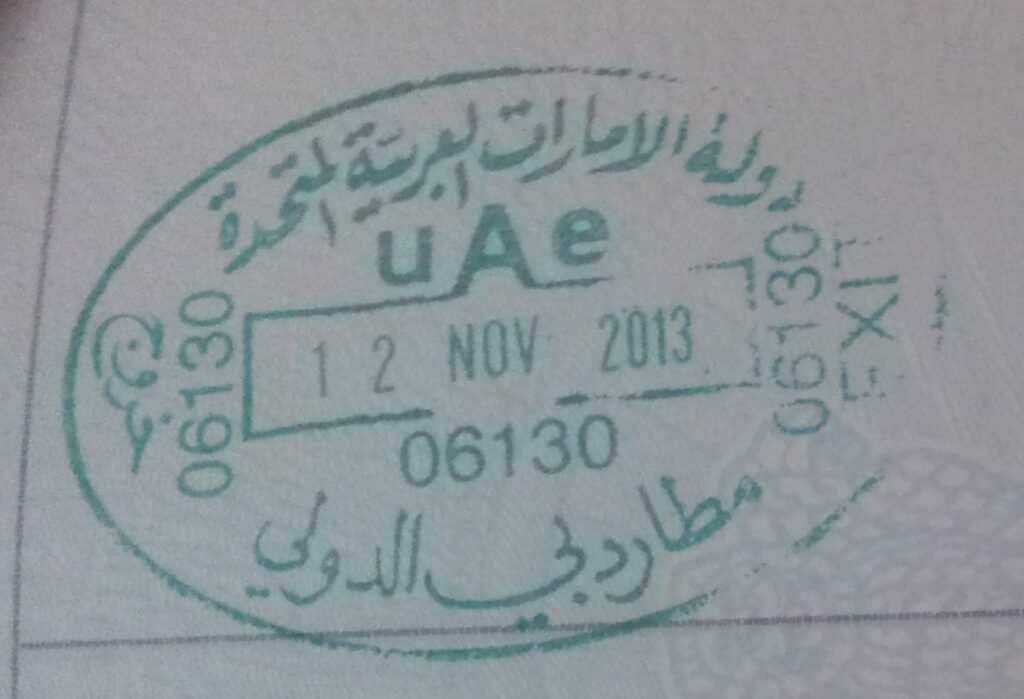
Most expatriates believe their grace period begins the day they hand in their office laptop or stop receiving a salary, but in UAE administrative law, those dates carry no legal weight. Your UAE visa cancellation grace period starts exclusively on the calendar date stamped on your official Federal Authority for Identity, Citizenship, Customs and Port Security (ICP) or General Directorate of Residency and Foreigners Affairs (GDRFA) cancellation approval sheet. Relying on workplace informal agreements or the original expiration date printed on your residence card frequently leads to unexpected overstay fines and blocked immigration files.
The framework is set by Federal Decree-Law No. 29 of 2021 on Entry and Residence of Foreigners and its Executive Regulations under Cabinet Resolution No. 65 of 2022, in force since 5 September 2022. It gave departing residents real flexibility — but only for those who read their own dates correctly. This guide sets out how long you actually have, when the clock starts, what it costs when it runs out, and the two places people most often lose weeks.
The date on your cancellation paper sets your UAE visa cancellation grace period, not the category tables
The official UAE government portal states that residents are granted longer flexible grace periods that reach up to six months, according to resident category, to stay in the country after the residence permit is cancelled or expired. However, general promotional tables published online often lead residents to assume they automatically qualify for maximum terms. The legal authority resides entirely in the exact date printed on the residence cancellation confirmation document generated by immigration authorities.
The bands reported for these grace periods run as follows, and they are a guide to what you should expect to see on the paper — not a substitute for reading it.
Expatriates must examine the issued paper directly or verify their standing online via the ICP smart services portal under the file validity service using their passport details, Emirates ID, or file number. If the document indicates a specific exit or status adjustment date, that date represents the binding legal limit regardless of general occupational expectations.
- 180-day grace allowance applies to Golden Visa and Green Visa holders alongside registered dependants, university graduates, widows, divorcees, and top-tier skilled professionals.
- 90-day grace allowance covers designated skilled-worker classifications and real estate property owners.
- 60-day grace allowance is granted to residency permits backed by a personal host or guarantor.
- 30-day grace allowance governs standard mainland and free zone employment residency contracts.
Your UAE visa cancellation grace period starts at immigration clearance, not your final day of work
A frequent mistake among departing employees is calculating their UAE visa cancellation grace period from their last working day or the date their employment contract was terminated. In practice, the immigration clock does not start ticking when an employee completes their internal handover, nor when human resources issues a notice of termination.
For an employment visa, the law mandates a strict sequence of government approvals. First, the employer must apply to the Ministry of Human Resources and Emiratisation (MOHRE) to cancel the labour contract and electronic work permit. The employee must sign this application, confirming receipt of entitlements or acknowledging the cancellation filing.
Only after MOHRE closes the labour file does the employer submit the formal cancellation application to ICP or GDRFA. The official UAE visa cancellation grace period begins on the exact date the immigration authority processes this final step and issues the cancellation form, meaning any processing delay by the employer postpones the start of your legal grace window.
That dependency on the employer is also the weak point. Only the sponsor can file a residence cancellation — the holder cannot do it themselves — so an employer who stalls is holding the start of your grace period, not just your paperwork. If a company will not cancel after the employment relationship has ended, the route is a labour complaint to MOHRE rather than an immigration application, because the residence file cannot move until the labour file closes. Raise it early: every week spent waiting is a week your grace period has not yet begun, but it is also a week closer to a visa that expires on its own terms.
Sponsors must cancel dependant residence visas before closing their own primary immigration file
Sponsoring family members creates a linked chain of residency files that must be unwound in an exact order. A primary visa holder cannot cancel their own employment or investor residency while active dependant visas remain attached to their primary immigration file. Attempting it in the wrong order is where applications stall.
When preparing to cancel your residence, you must first initiate cancellation for your spouse, children, or domestic staff sponsored under your name. The official guidance is unambiguous: an individual sponsoring a spouse, children or other dependants must cancel the dependants’ visas before cancelling their own. If you are transferring to a new sponsor rather than leaving, plan the dependant files into the same transfer rather than treating them as an afterthought.
Failing to manage this order properly can lead to severe operational issues. If a sponsor’s primary file is cancelled without addressing family records, dependants are left stranded on an invalid sponsor record, accruing daily fines without an active file head. Proper planning for sponsoring family on a free zone visa includes anticipating these mandatory closing sequences during corporate or career transitions.
Overstay fines accrue at fifty dirhams per day across every uncancelled visa file
Under Article 11 of Federal Decree-Law No. 29 of 2021, any foreigner whose residence permit has been cancelled or expired and who fails to depart or adjust their status within the prescribed window is subject to daily administrative fines. Official rules standardise overstay penalties at AED 50 per day for all categories, including tourist, visit, and residence visa holders.
Crucially, this AED 50 daily penalty accrues individually on every single file. If a family head with three sponsored dependants exceeds their UAE visa cancellation grace period, the total penalty accumulates at AED 200 per day across the four uncancelled passports. Over a two-week delay, this equates to AED 2,800 in administrative fines before any immigration file can proceed.
These fines must be settled completely prior to departing through any UAE exit port or receiving approval for a new residence permit. Neither ICP nor GDRFA systems will permit status adjustments or exit clearances while an outstanding overstay fine remains linked to your Emirates ID record or passport profile.
Employment contract termination triggers a fourteen day payroll settlement timeline that runs parallel to visa processing
Disagreements over final end-of-service benefits often stall the cancellation process, leading to confusion over statutory deadlines. Under Article 53 of Cabinet Resolution No. 1 of 2022 (the Executive Regulations of Federal Decree-Law No. 33 of 2021 on Labour Relations), employers are legally required to pay all end-of-service gratuities, leave encashments, and outstanding wages within 14 days of the contract termination date.
Employees and employers frequently conflate this 14-day financial settlement timeline with the post-cancellation grace period. They are entirely separate legal clocks running in parallel. The 14-day payroll clock governs employment law obligations under MOHRE, while the grace period governs residence rights under ICP or GDRFA.
Signing the MOHRE work permit cancellation document requires careful attention. The form includes a statement signed by the employee confirming that wages and end-of-service benefits have been received. If an employee signs this document before actual receipt of funds, MOHRE considers the employer’s financial obligation fulfilled on paper, enabling the visa cancellation to move forward even if payments remain outstanding.
Transitioning to a new sponsor requires completing an in country status adjustment before the grace period expires
Individuals remaining in the UAE to take up new employment or launch a business do not need to leave the country if they complete their administrative steps promptly. Once your previous visa is cancelled and your UAE visa cancellation grace period is active, your new corporate sponsor must issue a new work permit and entry permit.
After the entry permit is generated, the crucial administrative step is executing an internal status change. This procedure converts your immigration standing from your cancelled permit to your new entry permit without requiring physical departure through an airport or land border.
Completing the process of changing your visa status from inside the country must occur strictly before the final day of your grace period. If the status change application is submitted after the grace period expires, daily overstay fines of AED 50 will accrue and must be paid before the new residence stamp and Emirates ID can be finalised.
Absence from the country for over one hundred and eighty days invalidates standard residence permits automatically
Grace period rules interact directly with statutory continuous absence regulations. As a general rule under UAE immigration policy, if an expatriate resident remains outside the country for more than 180 continuous days, their residence visa is automatically nullified, regardless of the expiry date printed on their physical card.
Golden Visa holders are an explicit exception: the official portal states they have the ability to stay outside the UAE for more than the usual period of six months needed to keep their residence visa valid. For standard mainland or free zone residence permit holders who lose validity due to extended absence for approved reasons such as employment assignments, study, or medical treatment, specific re-entry protocols exist.
Affected residents can apply for an entry permit to return to the country after exceeding 180 days abroad, provided they supply verifiable justification. Exercising the out-of-country permit route means applying after 180 days abroad, providing a valid reason for the absence, and paying a fine of AED 100 for every 30 days or less spent outside the country.
Immigration files remain blocked from closure until all outstanding administrative fines are fully settled
Whether an individual intends to leave the UAE permanently or transfer to a new corporate establishment, active immigration files cannot be closed or updated while unpaid liabilities exist. Overstay penalties linked to the individual’s file must be cleared before government systems issue approval.
The practical effect is a bottleneck: sponsors cannot complete a cancellation or transfer, and the system will not generate a new entry permit. Anyone who overstays their UAE visa cancellation grace period must clear the accrued AED 50 per day through the ICP or GDRFA portal before the next application moves at all.
Run a file validity check before you book a flight, not after. An outstanding daily fine discovered at an exit counter costs the same money but far more time.
Frequently Asked Questions
How long is the UAE visa cancellation grace period for standard employment visas?
The UAE visa cancellation grace period for standard mainland and free zone employment visas is 30 days, running from official immigration cancellation. While specialised tiers like Green Visa holders receive up to 180 days, ordinary employee visas are generally granted 30 days. Verify the exact date on your cancellation paper rather than assuming it.
What is the daily overstay fine after the grace period ends in the UAE?
The overstay fine in the UAE is standardised at AED 50 per day for all residence, visit, and tourist visa holders. This fine accumulates daily for every individual file, meaning a family of 4 will accrue AED 200 per day until their status is regularised or they exit the country.
Can I stay in the UAE for 180 days after visa cancellation?
You can stay for 180 days only if you fall into one of the extended-grace categories — Golden Visa holders, Green Visa holders and their family members, widows and divorcees of residents, or students sponsored by UAE universities after graduating. Standard corporate employees receive only 30 days as stated on their official cancellation form.
How many days does an employer have to pay end of service benefits upon visa cancellation?
Under Article 53 of Cabinet Resolution No. 1 of 2022, an employer must settle all final end-of-service gratuities, accrued leave, and unpaid wages within 14 days of contract termination. This payroll deadline runs independently of your post-cancellation residence grace period.
What happens if a resident stays outside the UAE for more than 180 days?
Leaving the UAE for more than 180 continuous days automatically invalidates a standard residence visa, unless you hold a Golden Visa. To re-enter, affected residents must apply for an out-of-country re-entry permit and pay a fee plus a fine of AED 100 for every 30 days spent outside.
How can I check the exact number of days left on my grace period online?
You can verify your allowed stay online by visiting the official ICP smart services portal, navigating to Public Services, and selecting File Validity. Search by file number, or by passport or Emirates ID together with date of birth and nationality, and the result shows the days you are allowed to stay.
The Bottom Line
Immigration timelines in the UAE turn on one distinction: general policy guidance versus the binding official document in your hand. Your actual grace period is dictated strictly by the date printed on your official cancellation approval sheet, not by workplace assumptions or employment end dates. Managing dependant visas, monitoring statutory settlement windows, and resolving daily fine accruals promptly ensures full compliance with federal residence laws.
For business owners, investors, and professionals managing corporate transitions, establishing correct administrative workflows avoids costly overstay penalties and file freezes. StartZone UAE provides expert business setup, establishment cards, work permits, and comprehensive PRO and government liaison services across all seven emirates. Start your UAE business journey today.

