

By Sarah Al Mansoori | August 2026
The UAE media sector has gone from informal and flexible to strictly regulated. If you operate as an influencer, digital marketer, podcaster or production house, a formal media licence UAE is no longer something to defer until you scale. In 2026 every entity publishing, broadcasting or promoting content in the country needs the correct credentials, and operating without them carries severe financial penalties.
Before spending a dirham on setup, founders and agencies need to understand the legalities, the real costs and the differences between jurisdictions. This guide breaks down what these permits cost, which activities they cover, and how the 2026 rules change day-to-day operations.
The scope of media activities covered by a modern trade licence
A media licence in the UAE is not a single, generic permit. Instead, it is a business licence that must be mapped to specific, legally defined business activities. Free zones and mainland licensing authorities categorize media into distinct “activity families.” Choosing the wrong family can restrict your commercial operations or lead to compliance issues when you attempt to secure contracts with corporate clients.
The primary media activity families available in the UAE include:
- Advertising and Marketing Services: Covering digital marketing, traditional offline campaigns, and public relations.
- Social Media and Digital Content: Specifically catering to influencers, content creators, bloggers, and online community managers.
- Content Production: Covering film, television, radio, and podcast production, as well as post-production and editing services.
- Publishing and Broadcasting: Covering physical and digital book, magazine, or news publishing, alongside traditional radio and television broadcasting.
- Media Technology and Support: Including animation, gaming development, event media management, photography, and videography.
In Dubai and other major emirates, licensing authorities use standardized activity codes to classify these businesses. For instance, commonly requested codes include Marketing Services via Social Media (6202.99), Digital Content Management (7020.12), and Social Media Services (7310.16). When setting up your corporate structure, choosing and changing activities post-incorporation can be an expensive and bureaucratically exhausting process, making it essential to align your initial application with your actual commercial output.
Navigating the regulatory framework of a media licence UAE
Media activity in the UAE sits under a federal framework. The primary legislation is Federal Media Law No. 55 of 2023, with enforcement detail added by Cabinet Resolution No. 42 of 2025, which tightened compliance for digital media, advertising and online publishing.
The UAE Media Council is the federal authority. Free zones issue the trade licence, but your content and promotional activity stay under federal jurisdiction. High-risk activities — news broadcasting, political journalism and traditional publishing — need pre-approval clearance from the Council before any zone can issue the licence.
The penalties for failing to comply with these federal guidelines are severe. Operating a media business or publishing promotional content without the required licence can result in administrative fines ranging from AED 5,000 to AED 10,000. Content violations—such as publishing materials that violate public decency, spread misinformation, or fail to clearly label sponsored content—can attract fines starting at AED 5,000 and escalating up to AED 1,000,000 for major corporate infractions. Furthermore, publishing false information carries a mandatory AED 10,000 fine for a first offence, rising to AED 40,000 for repeat violations.
The Advertiser Permit UAE rule introduces strict compliance for promotional content
The most significant regulatory shift in recent years came into effect on 1 February 2026. Under the new enforcement guidelines, anyone publishing promotional or advertising content online from inside the UAE must hold an individual Advertiser Permit UAE issued by the UAE Media Council. This is a monumental shift that directly impacts the influencer and content creation economy.
The Advertiser Permit rule applies universally, regardless of your follower count, and crucially, regardless of whether you were financially compensated for the post. If you review a restaurant, promote a brand, or endorse a service online and you are based in the UAE, you must hold this permit. It is critical to understand that the Advertiser Permit is in addition to your corporate trade licence or freelance licence; it does not replace it. To apply for the permit, you must already hold a valid trade licence covering electronic media, social media, or marketing activities, such as a dedicated content creator licence Dubai or an equivalent free zone licence.
For UAE citizens and residents, the permit itself is currently free of charge for the first three years of operation. It is issued with a one-year validity and must be renewed annually. For visiting or non-resident creators, the rules are much stricter: they are only eligible for a three-month temporary permit, which is renewable only once. Furthermore, non-residents cannot apply directly; they must submit their application through a licensed, UAE-based media or talent agency that holds a valid corporate media licence. Some categories of the permit may also attract minor administrative fees at the time of application, which should be verified directly with the UAE Media Council.
Comparing the UAE media licence cost across major jurisdictions
No UAE free zone publishes a single fixed public rate card, so the UAE media licence cost swings with the zone, your visa count and the space you take. The ranges below are honest market figures as of August 2026.
Sharjah Media City (SHAMS) represents the budget entry point
For solo operators, digital marketers and startups, a SHAMS media licence is the cheapest mainstream route. SHAMS is digital-first: physical office space is optional and registration is streamlined.
- Starter Licence (Zero Visas): Approximately AED 5,750 per year. This is ideal for remote consultants or creators who already hold a UAE residency visa through a spouse or employer.
- Full Formation Package (With Visas): Typically ranges from AED 5,750 to AED 12,500, depending on whether you require one, two, or more visa allocations. This cost includes the establishment card and initial visa processing fees.
Ras Al Khaimah Economic Zone (RAKEZ) offers competitive hybrid structures
RAKEZ is competitive with SHAMS and popular where media production sits alongside e-commerce or physical trading.
- Basic Media Licence: Starts at roughly AED 5,750 per year.
- Media Freelancer Package: Also from roughly AED 5,750, a low-cost entry point for independent operators. If you are looking for solo operations, exploring a freelance permit across other northern emirates can provide a cheaper and more stable alternative.
twofour54 Abu Dhabi provides premium production infrastructure
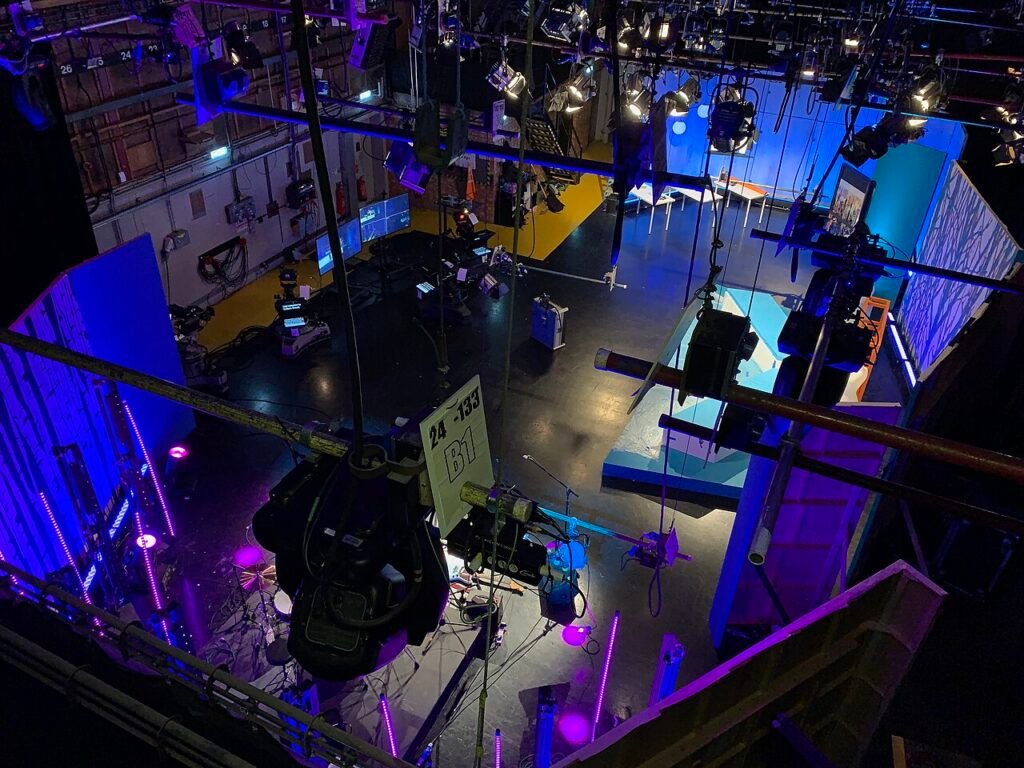
If you need physical studios, editing suites or proximity to government media entities, a twofour54 licence in Abu Dhabi is the industry standard — at a much higher cost.
- Media Licence Fee: AED 15,000 to AED 25,000 per year.
- Creative Services Licence: AED 12,000 to AED 20,000 per year.
- Technology and Media Support Licence: AED 15,000 to AED 22,000 per year.
- Education and Training Licence: AED 10,000 to AED 18,000 per year.
- One-off Registration Fee: AED 3,000 to AED 5,000.
- Workspace (annual): hot desk AED 8,000-15,000; dedicated desk AED 15,000-25,000; small private office AED 30,000-60,000; corporate suite AED 60,000-150,000 and above.
- Production facilities (daily): studio AED 2,000-8,000; post-production suite AED 800-2,500.
- Employment visas: roughly AED 3,500 to AED 5,000 per person.
For a solo operator or a small team setting up at twofour54, a realistic first-year budget ranges from AED 35,000 to AED 100,000 and above, completely excluding salaries and specialised equipment. The setup timeline in Abu Dhabi is also longer, typically taking 4 to 8 weeks.
TECOM Zones in Dubai offer high brand equity with restricted access
Dubai Media City, Dubai Production City and Dubai Studio City are the premium Dubai clusters under the Dubai Development Authority. They carry real brand equity but expect a physical presence and higher fees. Individual creators historically used the GoFreelance portal for a freelance media permit at around AED 7,500 a year, but several TECOM zones have paused new individual freelance registrations — confirm availability with the zone before budgeting on this route.
To accurately plan your cash flow, you must look beyond the initial setup fees and evaluate the three-year running cost of your company, which includes mandatory renewals, establishment card fees, and lease renewals.
Strategic selection of your media free zone based on business requirements
Choosing where to establish your media business should be dictated by your operational requirements and your client base, not just the initial setup cost. If your primary goal is to obtain a legal trade licence, secure a residency visa, and operate a remote digital marketing agency, SHAMS or RAKEZ are the most logical choices. They offer the lowest administrative friction and the fastest setup speeds.
If your business model relies on physical production—such as filming television commercials, recording high-end podcasts, or developing gaming software—twofour54 in Abu Dhabi is highly recommended. The access to world-class studios, government rebates, and a highly specialised talent pool justifies the premium pricing. Conversely, if your business relies on face-to-face meetings with multinational corporate clients based in Dubai, having a physical address in Dubai Media City (TECOM) carries significant prestige, though you must be prepared for the higher real estate costs and stricter licensing procedures. Mainland Dubai licences via the Department of Economy and Tourism (DET) are also available, but they require a physical office lease in the mainland, making them less attractive for small-scale digital operators.
Tax, VAT, and corporate compliance realities for media businesses
A free zone company is not automatically tax-free. Under the federal corporate tax regime, media companies pay 9% on taxable income above AED 375,000.
To benefit from the zero-percent rate, companies must strictly comply with the qualifying income guidelines, keeping in mind that most marketing, agency, and advertising revenues generated from mainland UAE clients do not qualify for this exemption. VAT registration at 5% becomes mandatory once taxable supplies and imports exceed AED 375,000 in any 12-month period — a threshold many agencies cross quickly.
Beyond tax, operational compliance remains a major hurdle. Once your trade licence is active, the next critical bottleneck is opening a corporate bank account, a process that typically takes between three to eight weeks and requires rigorous proof of business model and source of funds. Media companies, particularly those dealing with international clients or digital advertising spend, face strict scrutiny from UAE compliance departments. You must be prepared to show signed client contracts, active websites, and a clear business plan to pass bank compliance.
Frequently Asked Questions
Is an Advertiser Permit mandatory for all social media influencers in 2026?
Yes, the Advertiser Permit is mandatory for anyone publishing promotional or advertising content online from inside the UAE, regardless of follower count or whether they are paid. This regulation, enforced from 1 February 2026, requires all content creators to link their active social media accounts to this permit.
What is the cheapest media licence available in the UAE?
The cheapest mainstream route to secure a media licence in the UAE is through Sharjah Media City (SHAMS) or RAKEZ, where a basic licence starts at approximately AED 5,750 per year. These entry-level packages are ideal for solo content creators, digital marketers, and freelancers who do not require physical office space or extensive production infrastructure.
Can I run a media company in the UAE without a physical office?
Yes, you can legally run a media company without a physical office by opting for a free zone licence that includes a virtual desk or flexi-desk facility. Jurisdictions like SHAMS and RAKEZ offer these virtual setups as standard, though premium zones like twofour54 or Dubai Media City may require or highly encourage a physical workspace depending on your specific activities.
How long does it take to get a media licence in the UAE?
Getting a basic media licence in northern emirate free zones like SHAMS or RAKEZ typically takes between 3 to 10 working days. However, if you are applying in a specialized zone like twofour54 or require additional approvals from the UAE Media Council for broadcasting or publishing, the process can take between 4 to 8 weeks.
Do I need extra approvals for broadcasting or news publishing activities?
Yes, any media activities involving broadcasting, news dissemination, or traditional publishing require additional regulatory clearance from the UAE Media Council before your licence can be fully issued. These activities are heavily regulated, and the approval process will add several weeks to your overall setup timeline and may incur additional administrative fees.
Does a UAE media licence exempt my business from corporate tax?
No, a UAE media licence does not automatically exempt your business from the 9% corporate tax, which applies to all taxable income exceeding AED 375,000. Free zone entities must meet strict Qualifying Free Zone Person criteria to claim a 0% rate, and standard agency fees or local advertising revenues generally do not qualify.
Ready to licence your media business in the UAE? Start your UAE business journey today →

